WordPress 7.0 is one of the most important updates in recent years, bringing major improvements in performance, full site editing, and developer experience. This version continues the platform’s shift toward a modern, block-based website building system.
Why WordPress 7.0 Matters
With increasing competition from website builders like Webflow and Shopify, WordPress needed a strong evolution. Version 7.0 focuses on speed, usability, and flexibility while maintaining its open-source advantage.
This update is not just about new features — it represents the future direction of WordPress development.
Key Features of WordPress 7.0
1. Improved Gutenberg Block Editor
The Gutenberg editor has been enhanced for better performance and usability. Editing is now faster and smoother, especially on large websites.
- Faster block rendering
- Improved responsive controls
- Better design flexibility
- Cleaner user interface
2. Full Site Editing (FSE) Improvements
Full Site Editing is now more stable and practical. Users can design entire websites using blocks without relying heavily on traditional themes.
- Edit headers and footers visually
- Global styling controls
- Reusable block patterns
- Better template customization
3. Performance Enhancements
WordPress 7.0 introduces significant speed improvements that directly impact SEO and user experience.
- Faster page load time
- Optimized database queries
- Improved script loading
- Better Core Web Vitals
4. Developer-Focused Improvements
This version provides new APIs and tools that simplify plugin and theme development.
- Enhanced block APIs
- Better developer tooling
- Cleaner code structure
- Improved extensibility
5. Real-Time Collaboration (Coming Soon)
Real-time collaboration was expected in WordPress 7.0 but has been delayed to ensure stability and performance. It is likely to be introduced in future updates.
WordPress 7.0 Connectors: A Game Changer for Integrations
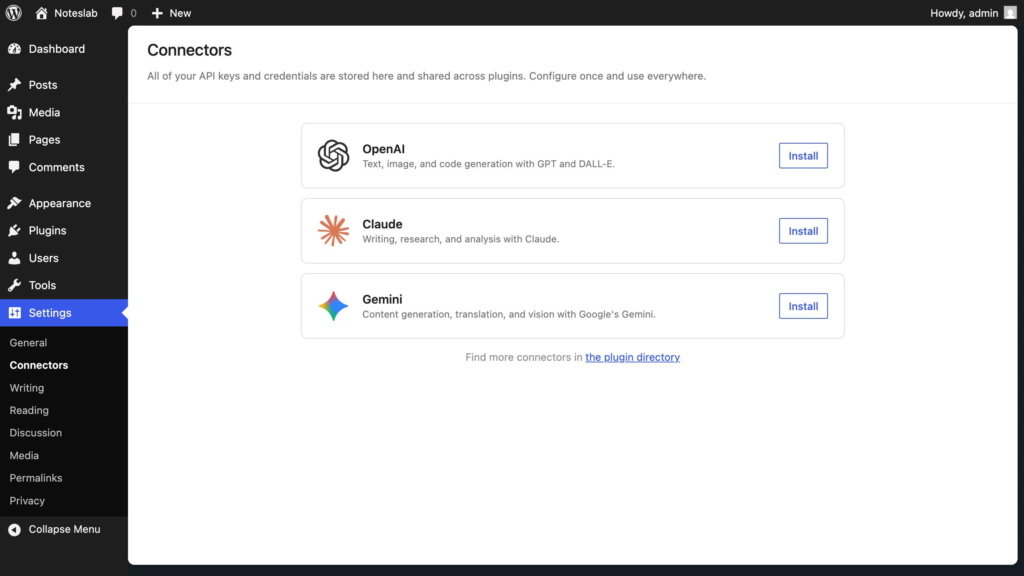
One of the most powerful additions in WordPress 7.0 is the introduction of Connectors. This feature is designed to simplify how WordPress websites interact with third-party services, APIs, and external platforms.
Connectors act as a bridge between your WordPress website and external tools such as CRMs, email marketing platforms, analytics tools, and automation services. Instead of relying heavily on multiple plugins, WordPress now provides a more standardized and efficient way to manage integrations.
What Are Connectors in WordPress?
Connectors are a structured system that allows developers and users to link WordPress with external services through a unified interface. They reduce the complexity of API handling and make integrations more consistent across different plugins and themes.
In simple terms, connectors help your website “talk” to other platforms without needing complex custom code.
Key Features of WordPress 7.0 Connectors
- Centralized Integration Management: Manage multiple external connections from a single dashboard.
- Reduced Plugin Dependency: Fewer plugins are required for integrations.
- Standardized API Handling: Developers can follow a consistent structure for building integrations.
- Improved Security: Better authentication handling and data protection.
- Performance Optimized: Lightweight connections reduce website load.
Use Cases of Connectors
Connectors open up several possibilities for website owners and developers:
- Connect WordPress forms directly to CRM tools
- Sync user data with email marketing platforms
- Integrate payment gateways more efficiently
- Automate workflows using external automation tools
- Send real-time data to analytics platforms
WordPress 7.0 for Developers
Developers should start adapting to the block-first approach. Modern WordPress development now involves working with Gutenberg, React, and APIs.
- Block themes are becoming standard
- JavaScript skills are more important
- Plugin compatibility testing is essential
Should You Update to WordPress 7.0?
If you are running a production website, it is recommended to wait for minor updates before upgrading. However, new websites can safely start using WordPress 7.0.
Is WordPress Still Relevant in 2026?
Yes, WordPress remains one of the most powerful and flexible website platforms. Its open-source nature, large plugin ecosystem, and strong SEO capabilities make it a top choice for developers and businesses.
Final Thoughts
WordPress 7.0 is a major step toward a faster, more modern, and user-friendly platform. Whether you are a developer, freelancer, or business owner, this update is important for future-proofing your websites.