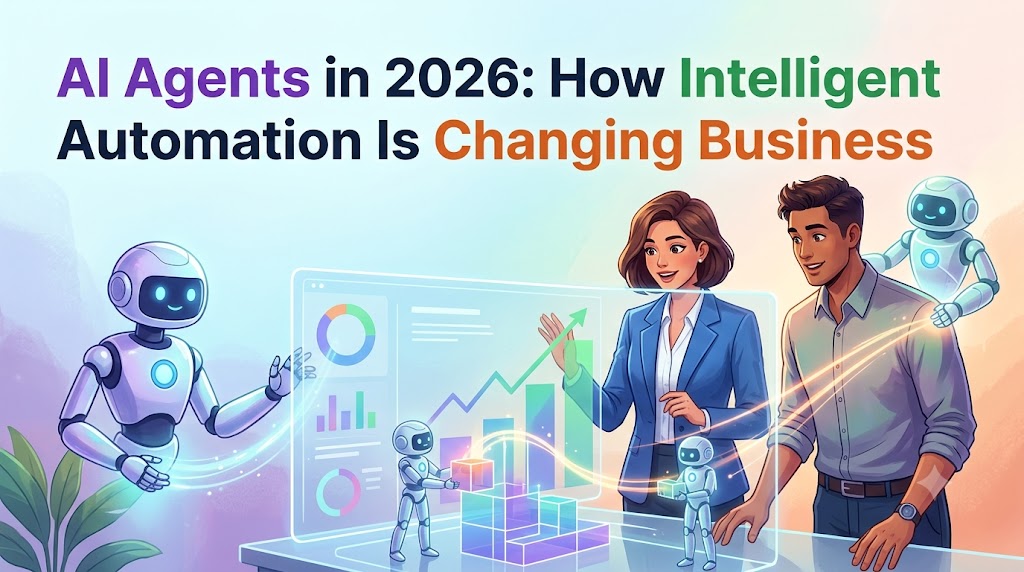
Artificial Intelligence has evolved far beyond simple chatbots and content generators. In 2026, the biggest trend shaping the technology landscape is the rise of AI Agents. These intelligent systems are designed to perform tasks, make decisions, interact with software, and complete complex workflows with minimal human intervention.
From customer support and software development to marketing and business automation, AI agents are transforming how organizations operate. Many experts believe that AI agents will have a greater impact on productivity than traditional Generative AI tools.
What Are AI Agents?
An AI agent is a software system that can understand goals, plan actions, execute tasks, and learn from results. Unlike traditional AI chatbots that only respond to questions, AI agents can actively complete tasks on behalf of users.
For example, an AI agent can:
- Schedule meetings
- Reply to emails
- Analyze business reports
- Generate marketing campaigns
- Monitor website performance
- Create and deploy code
- Manage customer inquiries
These capabilities allow businesses to automate processes that previously required human effort.
Why AI Agents Are Trending in 2026
The AI industry has entered a new phase. Instead of focusing solely on generating content, organizations are deploying AI systems that can take action.
Increased Productivity
AI agents can handle repetitive and time-consuming tasks, allowing employees to focus on strategic work. Businesses are reporting significant efficiency improvements by integrating AI-driven workflows.
Better Decision Making
Modern AI agents can analyze large amounts of data and provide actionable insights. This enables organizations to make faster and more informed decisions.
Cost Optimization
Companies are looking for ways to reduce operational costs. AI agents can automate customer support, administrative work, and routine business processes, reducing the need for manual intervention.
Integration With Existing Tools
Today’s AI agents can connect with CRM platforms, project management software, email systems, calendars, and cloud services, making them practical for real-world business operations.
Industries Being Transformed by AI Agents
Marketing
AI agents can manage social media campaigns, create content calendars, perform keyword research, optimize advertising campaigns, and analyze performance metrics in real time. Businesses can scale their marketing efforts while reducing manual workload.
Software Development
Developers increasingly rely on AI-powered assistants that can generate code, identify bugs, create documentation, and perform testing. This significantly speeds up development cycles and improves software quality.
Customer Service
Businesses are deploying AI agents to provide 24/7 customer support. These systems can answer common questions, resolve issues, and escalate complex cases when necessary, resulting in better customer satisfaction.
E-Commerce
Online retailers use AI agents to personalize shopping experiences, recommend products, automate inventory management, and improve customer engagement throughout the purchasing journey.
Healthcare
Healthcare organizations are exploring AI agents to assist with scheduling, data analysis, patient communication, and administrative workflows, helping professionals focus more on patient care.
The Rise of Voice AI Agents
One of the most exciting developments in 2026 is the rapid growth of voice-based AI agents. These systems can engage in natural conversations and perform actions through voice commands.
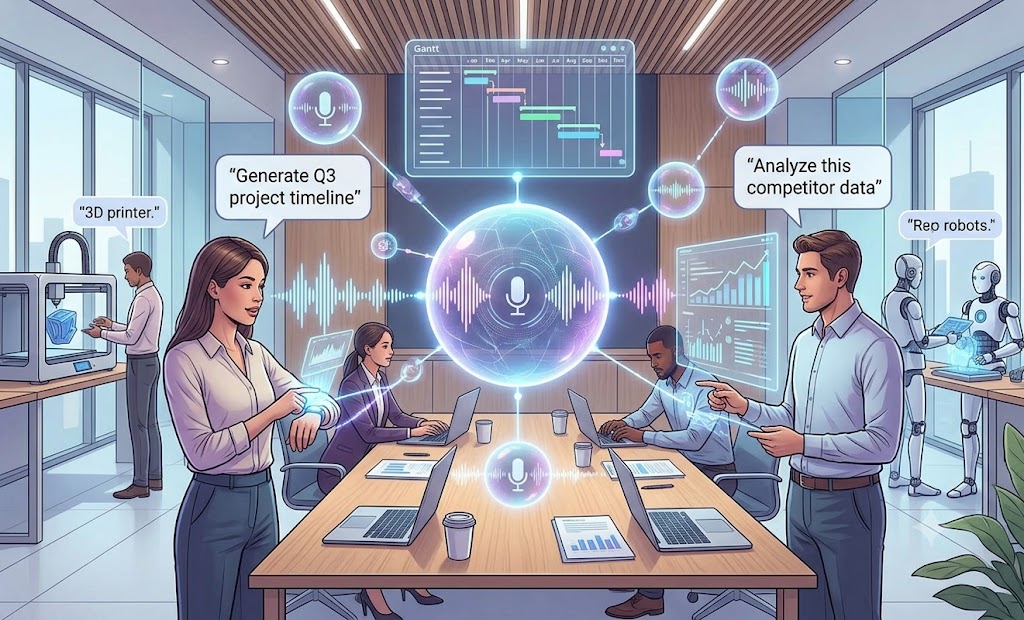
Businesses are already implementing voice agents for:
- Customer support
- Appointment booking
- Sales assistance
- Technical support
- Internal employee help desks
As voice technology continues to improve, these agents are becoming increasingly human-like and capable of handling more sophisticated interactions.
Opportunities for Businesses
Organizations that adopt AI agents early can gain a significant competitive advantage through:
- Faster operations
- Improved customer experiences
- Reduced operational costs
- Better scalability
- Increased employee productivity
- Enhanced decision-making capabilities
Small businesses can now access automation capabilities that were previously available only to large enterprises.
Challenges and Considerations
Despite their benefits, AI agents also introduce several challenges that businesses must address.
Data Privacy
Organizations need to ensure that customer and business data is handled securely and complies with relevant regulations.
Security Risks
AI systems must be protected against unauthorized access, misuse, and cyber threats.
Human Oversight
While AI agents can automate many tasks, human supervision remains essential for quality control and ethical decision-making.
Regulatory Compliance
Businesses must stay informed about evolving regulations governing AI usage and data management.
The Future of AI Agents
Experts predict that AI agents will become an integral part of everyday business operations over the next few years. Instead of switching between multiple applications, users may increasingly rely on intelligent assistants capable of coordinating tasks across different platforms automatically.
Future AI agents are expected to become more autonomous, context-aware, and capable of handling increasingly complex workflows. This evolution could fundamentally change how people work and interact with technology.
Final Thoughts
AI agents are rapidly becoming one of the most important technology trends of 2026. Their ability to automate workflows, improve productivity, and streamline operations is creating new opportunities across industries.
Businesses that begin exploring AI agent technology today will be better positioned to adapt to the future of work, improve efficiency, and maintain a competitive advantage in an increasingly digital world.
AI agents are not just another technology trend—they represent a major shift in how businesses operate, automate processes, and create value in the modern economy.